New York
How to visit New York without treating it like a checklist.
This page is for a first visit: how to pick a neighborhood, how the subway feels, and what to skip. A station agent has already answered the same question many times today. The air tastes like brake dust and a cart’s onions. People going to work have already walked farther than a tourist afternoon.
What the city is like
First-timers try to cover New York as if it were a list. The city does not work that way. Jackson Heights still has faces that remember the block. Midtown has faces that remember the last tour. Both are New York. Neither is a performance. A grocer under a tin awning still sells plantains, soap, and a coffee that is someone’s three o’clock. The person behind the counter is not an extra.
Do not start with the skyline. Start with a neighborhood that rebuilt after a highway, a rent spike, or a tower replaced the lunch counters. What people call old New York is often a shop that kept its lease, a stoop that outlasted the last landlord, or a parish that still feeds people on a weekday. The street grid survives. The people on it change faster than the brochure.
High rent decides who can stay. You will not see the lease. You will see a roommate carrying a bike up a walk-up, a family split across two boroughs, and a bar that used to be a hardware store. Monthly figures change. You can already see the pressure on the faces.
How to spend a day
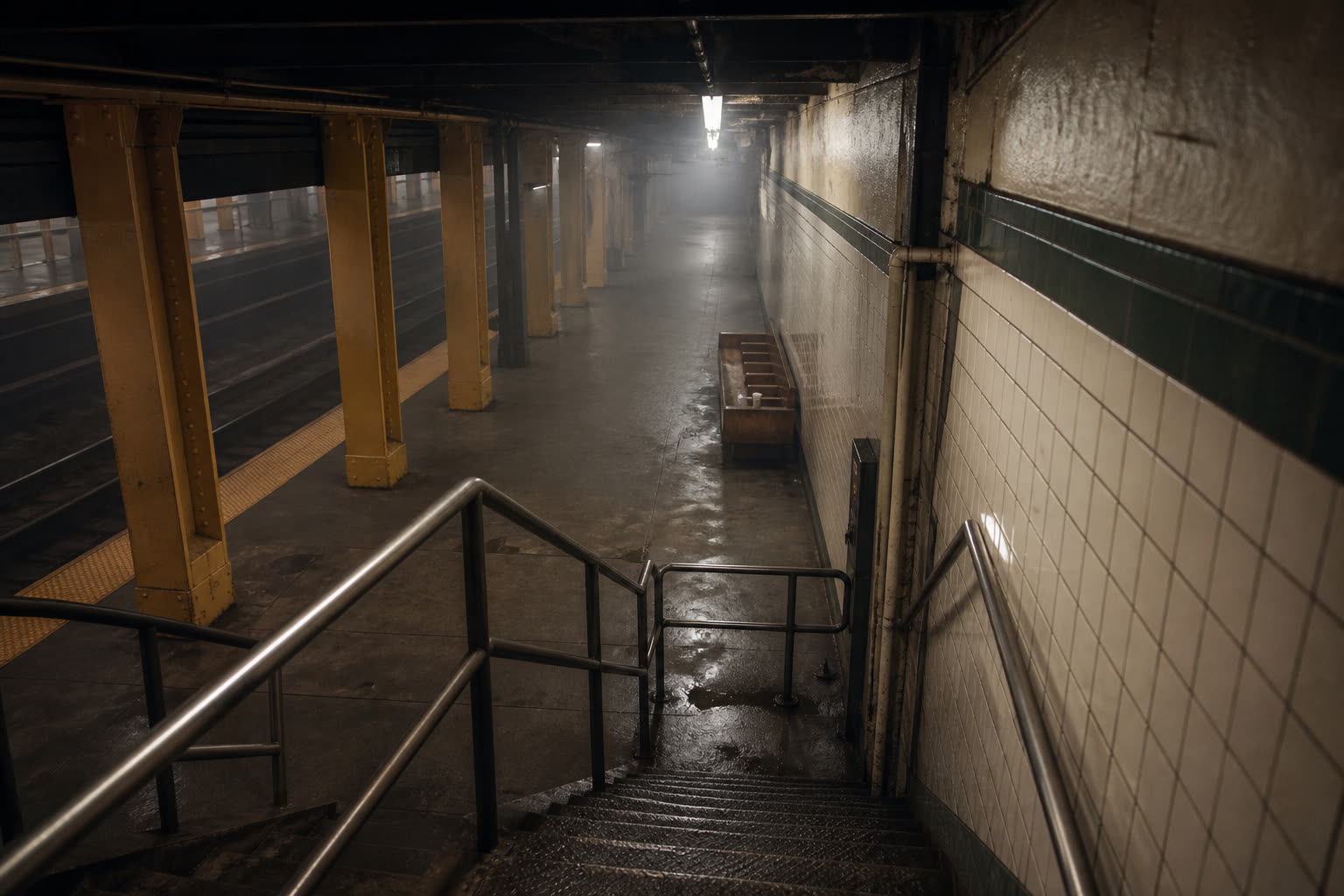
Sunday on a platform is the honest museum. A father carries a backpack that is too organized. A grandmother makes her body into a gate so a stroller can pass. Couples have not decided the lease. A single person finishes a bag from a cart, which is not the same as lonely, not yet. Watch who holds whose bag. That is more of the city than any tower.
Stay in one neighborhood until you recognize the shops. A Brooklyn avenue that still has a hardware store, a Queens stretch that changes language every two blocks, or a Harlem morning that is not a tour: pick one. In the afternoon, choose a park or a museum, not both plus a deck. In the evening, sit at a counter that seats eight, or use a cart if the night already happened. Ride home like a person who lives here for a week. The commuters will still be going to work.
If your feet hurt after a day in one neighborhood, you planned well. If they hurt from walking through Times Square, you spent the day on a tourist corridor.
What you can take home
Public space here is a shared hallway. Keep moving in the car. Trash is a civic argument the city has not won. People will help with a map and then vanish into privacy that looks like rudeness. Attention is the cost. The city’s history sits in ordinary places: a second-floor walk-up, a subway line that still crosses the boroughs, and a stoop that stayed after the last viral photo of stoops.
Transfers teach more than a tower. A connection that looks tidy on a map can be ten minutes of humidity and a river of people who already know which stair. Summer is a wet backpack. Winter is a dry wind that finds the gap in a coat on a platform. The cars are cold enough to need a layer. The streets hold the day’s heat. A visitor learns both in the same hour.
Tourists and locals are not two uniforms. They are two speeds. The local is already late. The tourist has paid to stand still in the doorway. Times Square is where that argument becomes architecture. Walk through it once if you must. Then go to a neighborhood where the grocer still knows regulars. The landmarks page tells the rest.
Common questions
Decide
What should I actually do in New York?
Stay in one neighborhood until you recognize the shops. Buy coffee from a bodega that knows the block. Watch a Sunday platform and notice who holds whose bag. Eat dinner in Queens — start with the food page. Sit in a park. The city is neighborhoods stacked on one subway map, not a skyline you photograph and leave.
What can a visitor learn here?
Moving quickly is how people stay polite. English is assumed, and you should not punish anyone for that. A transfer that looks tidy on a map can still be ten humid minutes of stairs. People will help with directions and then vanish into their own hurry. The real cost is attention, not a tower ticket. For who is actually here, read people.
How many days does New York actually want?
Take three full days if this is the only American city. That is enough time to learn one neighborhood and sit in one ordinary room. Take four or five if a second borough and one park get a morning each. A single overnight treats the city like a layover with neon.
Where should a first-timer sleep?
Do not sleep inside Times Square. Choose a bed you can walk from to a grocer. Lower Manhattan works. A Brooklyn or Queens edge works if you can stand a short train. Upper Manhattan works if the park is your morning. Midtown is a transfer corridor with hotels, not a neighborhood. Times Square is not a base.
How does the subway actually feel?
It is crowded, useful, and often the only room the city shares. Tap in and tap out with OMNY or the card the machines still sell. Current fares are on the MTA site. This page does not list them because they change. Learn one line by accident. Stand out of the door. Locals already know which stair to take.
When do the crowds win?
Crowds win any week the lights are sold as a product: December in Midtown, a Saturday on the High Line, or a Sunday on the Brooklyn Bridge walk after late morning. The outer boroughs still have a quiet hour when people shop. If the week is only famous views, you will leave tired and sure you saw New York. The landmarks page has the honest list.
How to be a guest
Get the subway working, then stay in one neighborhood
Get a tap card before you collect opinions
Use OMNY or the card the machines still sell. Current fares are on the MTA site. This page does not list them because they change. Reload the card when the reader asks you to.
Treat the subway as other people’s commute
One line teaches the neighborhoods: who gets off with a school bag, who stays for the office belt, who is already asleep standing. After that, learn a second line by accident. Stand out of the door. Let people off.
Stay until you recognize the street
Avoid Midtown if you can. Use a Brooklyn, Queens, or Harlem morning if the block still has a name. Eat where the shift eats — start with food. Watch who is walking.
Leave like a person who has a last train
Keep your voice down in the car after the late hour if the car is already a bedroom. Do not block a stair for a video. Next: how the city pairs people, or the America overview if you are still deciding whether this is the week.