Korea · Nature & Seasons
Office workers hike Bukhansan after the last meeting.
Seoul has a mountain the way some cities have a river: people actually go there after work. Color-coded hiking clubs, kimbap, a seriousness that is not a campaign. You are welcome on that path. The hard part is the calendar and the air: Chuseok empties beaches toward hometowns, and fine-dust days happen. Start early. Leave the speaker at the hotel.
The living culture
Landscape here is used. Bukhansan and its cousins are civic infrastructure. Weekends fill with clubs, kimbap, and rules a guest joins rather than invents. Jeong on a trail is a greeting if greeted, a passing that does not blast a speaker. The workweek leaks onto the slope in the late afternoon. Families treat a mountain like a park with granite. Seasons still have jobs. Spring blossom is a crowd. Summer is a wet heat. Autumn is the country’s best walking argument. Winter is a dry cold and a river wind.
History that is still underfoot: Gyeongju’s grass mounds are Silla tombs in a basin, not hills for a picnic. The peninsula’s hard northern edge is a military and diplomatic fact; the DMZ is not atmosphere. When the war came south, Busan’s hills held families from everywhere on the map — that mix is still in the food and in a stranger who talks as if the conversation was already agreed. Walk a mound or a cliff knowing which one is a grave. That fact changes the feet.
What is there to sit with
Bukhansan from a subway, early, is a city mountain with a hobby’s manners. Hangang paths are the capital’s horizontal park: bikes, tents, stretching, a convenience-store dinner that faces the water. A jjimjilbang after a walk is a civic room — heat, a floor nap, families — not a wellness brand. Busan’s coast is a port remembering the sea: Gwangalli’s bridge lights, a smaller strip where laundry and the tide share a line, Jagalchi as work before it is a view.
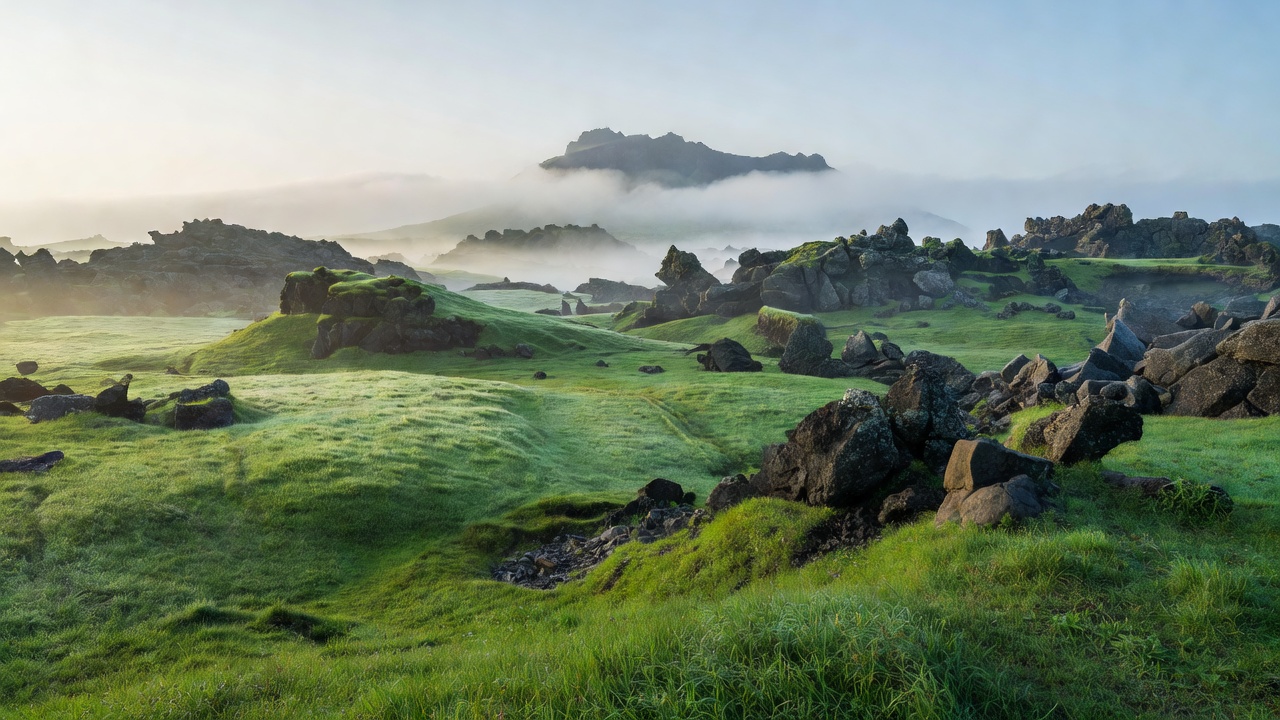
Jeju is volcanic and a spare-day island, with its own weather and a sea that is a workplace for some. Gyeongju is grass and names, not a hiking peak. None of these replace the mountain behind the office. They are different weathers. Pick one extra if the week still breathes. Cherry forecasts and autumn foliage announcements are official-adjacent weather. Use year-labeled pages.
What you can learn from it
Public space on a Korean trail is a shared room with visors. Keep the custom of the path. Pack the waste. The clubs earned the morning. Food is kimbap as logistics, then a stew that returns the body to the city. Time is seasonal and civic: Chuseok and Seollal — harvest and lunar new year — rearrange beaches and hometowns; some city rooms empty because households still visit themselves. That is not a scheduling trick. It is a calendar with graves and living rooms that are too small.
Family teaches the three-generation restaurant after the mountain, and the grandmother who was already on the sidewalk before the trailhead. Craft is the used landscape itself — stairs, a temple in trees that still works, a coast that did not get pretty for a guest. Transferable literacy: inhabit one weather. A city week can include a mountain. An island is not a prize for finishing Seoul.
How to stay a guest
Keep right or keep the local passing custom. Leave the speaker at the hotel. On Jeju, drones over a cliff are not a personality. In Gyeongju, the mound is a tomb. If the DMZ is on the week, go through official channels and treat it as a border. Fine-dust days happen. August humidity sits on the slope. Sunday trails fill because families still walk together.
We will not invent a cable-car fare or a blossom date. Year-labeled official pages, operator notices the week of a border visit. One coast or one island, not both. The visor clubs will not ask twice. The last subway from the trailhead still fills with people who have a Monday.
The mountain does not need a summit pose. It needs the path kept, and the hiking clubs allowed to pass.
Decide
Decide
Can a city week include a mountain?
Yes. Seoul’s mountains are a subway ride. Start early. Bring water. Jeju is not required to have touched the peninsula.
When is the walking weather?
Autumn is the argument most residents would make. Spring is crowded. Summer is a negotiation with humidity.
Is Jeju necessary?
Only if the week has slack. It is an island with its own weather, not a prize for finishing Seoul.
How should the DMZ be read?
A military and diplomatic fact, not a theme park. Official channels. A border, not a backdrop.
How to sit with this
Use the mountain the city already uses
A Seoul trail on a weekday morning beats an island that cannot be finished.
Read the holiday before the beach
If families are moving, the week is their weather. Slack, not a raid.
One coast or one island, not both
Busan or Jeju. The week is not a peninsula-shaped checklist.
Leave the speaker at the hotel
The path is a shared room. The visor clubs will not ask twice. The subway still goes back down.
This is a culture desk, not a booking desk. Official entry and rail numbers live on their source pages — we will not invent a fare here. Prefer the atlas if you want the next country, or Understand if you want the next category.