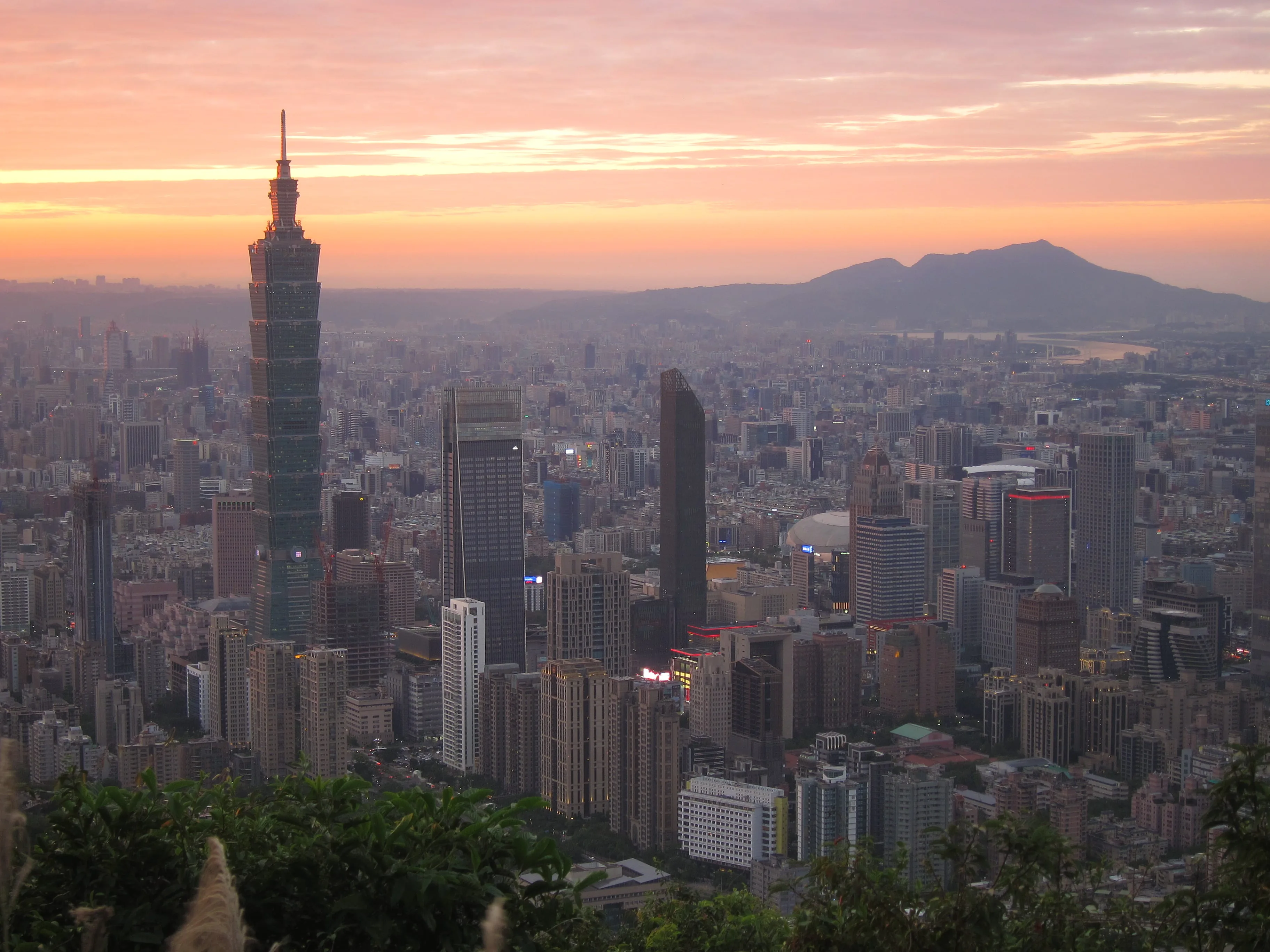
Taiwan · essay
The ministries moved north. The table stayed.
A visitor who meets only the tower will think the island began with a skyline. Beneath the tile lie a first capital, a colonial railway, a light for Mazu on a lane of walk-ups, and a year that still changes how a family walks through a park. Come to understand what is underfoot, then stay a guest in the temple hall.
The living culture
Taipei sets the volume; Tainan holds the older history. Families still come on the first and fifteenth of the lunar month as though for a standing appointment. Keep your voice low, and leave the incense alone until someone shows you. The fort at Anping is brick and harbor wind, not a box to tick for your camera roll, and the old city is the other half. Don’t try to collect both in one exhausting afternoon.
Indigenous peoples were here before any of those flags. You will see it in a place name, a museum room, a language on a sign you cannot yet pronounce. Do not flatten it into a costume, and do not ask a stranger to explain an entire people to you. Learn the word for thank you, and then be quiet; read enough language to get around.
The island goes to the temple, then back to work. You may sit in a hall. You may not become the commentator.
What is there to sit with
The mosaic-tiled walk-ups belong to the boom years, built by families who bought a floor and stayed. Newer towers have lobbies and fewer grandmothers in the hallways. Japanese-era brick still holds up a post office and casts a line of shade. Democracy here is younger than many of the aunties on the plastic stools. A Mazu temple at the end of a market street is a household’s act of worship, not folklore.
You will pass places of mourning that carry no caption. Sit if the place is meant for sitting. Don’t narrate the incense, and don’t film the children on an offering day. The visitor who wants to lecture from the sidewalk is the problem. The visitor who reads a plaque and then goes to breakfast has understood.
What you can learn from it
How many identities can share a small map without collapsing into one slogan. A Japanese-era station, a Qing temple, an engineer’s suitcase on the morning train south to the science park: all of them are the same country. A gentle arrival does not mean a thin culture. This is a place that lets a visitor in, and then asks for attention.
Rail math and entry rules stay on official pages: BOCA and THSR. The kits stay free on Free kits. We will not invent a museum ticket or a partner button.
Decide
Where does the island’s older history live?
In Tainan. This was the capital when a Dutch fort stood at Anping, when Zheng Chenggong took the island, and when the Qing governed Taiwan from here. Taipei received the ministries later; Tainan kept the temples and the breakfast. Walk until another temple hall appears. That is the visit, not a chart of dynasties. Read Tainan at walking speed.
What is the Japanese-era brick still doing?
Holding up walls. Railways, post offices, some Taipei streets and the remains of sugar towns carry the colonial years in their materials, not only in museum captions. Don’t deliver a lecture on the sidewalk, and don’t film a shrine as if you were on safari. The brick is still a wall someone lives behind. For houses as a mosaic of the boom years, read how houses feel.
How close should a visitor come to 228 and martial law?
Close enough to understand that the quiet is not emptiness: a park, a museum, a date some families still do not mention at dinner. You do not need a lecture from a travel page. You need to avoid treating a place of mourning as a photo opportunity. Official memorial sites exist; sit in one, and save the commentary for the train. Being a guest has its own longer essay: being a guest.
Can I see the history in a morning?
No. Museum hours change, and lunar temple days move. We will not freeze a blog’s schedule into this page. At many temple halls the first and fifteenth days of the lunar month remain a standing appointment. Check with the institution the week you go. History here is texture beneath the scooters, not a quiz.
One older room, then breakfast, and no lecture
Give Tainan a night if history is the point of your week
The high-speed rail station is a transfer point, not the front door. Stay the night, because breakfast is the next chapter. Anping takes half a day if you don’t turn it into a list. Read Tainan.
Read the wall, not the algorithm
Brick, mosaic tile, a plaque. One park that is not empty. Official museum rooms when you want a fuller story; we will not invent their hours.
The first and fifteenth are days of worship
Temples fill because families still go. You may stand at the edge. Leave the offering table alone until someone shows you, and keep your voice low. Read marriage and family.
Save the commentary for later
Don’t draw a shopkeeper into a seminar, and don’t treat a memorial as a set. Then go and be a guest in someone else’s living room.