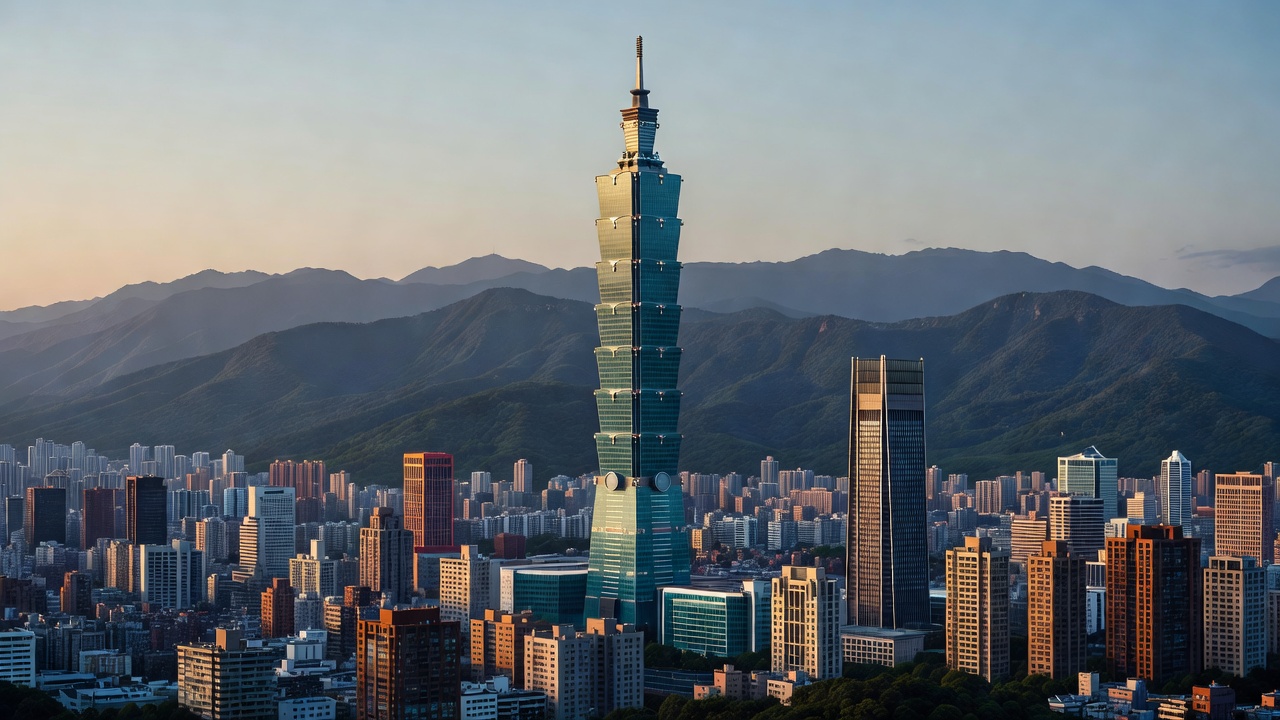
Taiwan · Why Travel
Why Taiwan rewards the person who stays for the second stall
A nurse still in uniform takes the last stool at a night-market stall. The cook does not look up. This is not a show for the suitcase. It is how a dense island eats when the office lets go. Heat is already a second coat. South of here, Tainan will want rice porridge and a temple that has been collecting incense since the island had a different capital. Come to read that kitchen.
The living culture
Taipei looks easy to enter: an MRT that behaves, English on more signs than some neighbors, a café on the walk from the interchange. Under that softness, people still grind. Walk-ups with mosaic tile. Scooters parked where a lobby would be. A trash truck that plays a melody down the alley, and a building that treats taking the bag down as civic religion. Humidity is a scheduling constraint, not a mood.
The island speaks in more than one mouth. Mandarin will move a visitor. Taiwanese Hokkien will tell you where you are, especially once the high-speed line drops you in the south. Hakka has its own rooms. Indigenous nations are not a footnote and not a costume shop. A guest who only learned one slogan about the strait has not learned the island.
Tainan was the capital when the Dutch built a fort at Anping, when Zheng Chenggong took the island, when the Qing ran Taiwan from here. Taipei got the ministries later. Tainan kept the recipes and the temples. Families still show up on the lunar first and fifteenth like a standing meeting. That history is underfoot at breakfast. It does not need a recitation at the first bowl of tofu.
What is there to sit with
Night markets are how a dense city eats after the office. They are not a carnival imported for visitors and they are not a ranking. A student, a nurse, a family that drove in, the stall’s own children in the same line. Shilin has the parade weather. Ningxia is closer to a neighborhood arguing about food. Raohe ends at a Mazu temple so the street remembers it was never only about the visitor. One market is night as a public room. A pilgrimage of every stall on the island is a queue you invented.
Tainan does breakfast as the day’s argument, not as fuel. Metal stools. Rice porridge. Three generations at a round table, a lazy Susan that never quite stops, an auntie who will decide the next bowl. The high-speed rail makes the island look small. It is not small if you walk. The station sits in Guiren, not the old city — a transfer, not a front door.
Tea houses still pour. Oolong names elevations and weather; a shop that lets a guest sit is teaching a mountain and a season. A cold bottle on the MRT is also Taiwan — honest, for the commute. Both can be true. Between stations, Taipei is villages: each interchange a neighborhood with a breakfast stall, a walk-up grid, a temple the size of a garage. Mazu temples — sea-goddess halls in port towns and at the end of market streets — are household attendance, not folklore. The Dajia procession in the third lunar month is a city that rearranges itself around a goddess who protected the crossing. A guest may watch from the side. The incense is not a soundtrack.
What you can learn from it
How a crowded island stays warm without becoming a performance. Line as a hallway. Volume as a civic skill. Food as a clock: breakfast in the south, night as a public room in the north, tea as a sit rather than a spa scent. The convenience store is infrastructure for the hour between the last meeting and the first real meal.
How many identities share a small map without collapsing into one slogan. A Japanese-era station building, a Qing temple, a Hsinchu commuter with a work suitcase on the morning high-speed south — they are the same country. Soft landing means the island is easy to enter, not that the culture is thin. It lets a guest in and then asks for attention.
What a working religion looks like when it is not staged. The first and fifteenth. A grandmother who has been on the same plastic stool longer than the shop behind her. A drum that belongs to the hall, not to a reel.
How to stay a guest
Line up. Sort the trash. Keep a temple voice in a temple. Do not film a child in a night-market aisle. Buy, eat, thank, move. The stall is a second shift: prep in the afternoon heat, smoke at night, inventory when visitors are asleep. The family that runs it did not open for a camera.
Sleep near an interchange if Taipei is the first chapter. Give Tainan its own night if breakfast is the reason. Run official high-speed tables against the seats that will actually be sat in; fares live on the operator’s pages, not in a guessed figure here. Typhoons are a season. Slack in the calendar is respect. Two greetings will do more than a speech: Mandarin to move, a little Hokkien in the south as a nod, not a costume.
The stall at eleven is not entertainment. It is a city that never outsourced dinner.
Decide
Decide
Is a long weekend enough to understand anything?
A long weekend is Taipei as one MRT village and one night as a public room. That is a chapter, not a failure. Tainan wants its own sleep if breakfast is the reason for coming. Three to five unsmashed days is a trip. Stacking the tower, a gorge, and the south into one weekend is a commuter you invented.
Is Taiwan just Japan, cheaper?
No. That sentence is a failure of attention. The night, the languages, the political weather, the breakfast, the Mazu hall at the end of the market — different country. Price is not a personality, and we will not invent one.
What languages will a guest actually hear?
Mandarin moves a visitor. Taiwanese Hokkien tells you where you are, especially in the south. Hakka and indigenous languages have their own rooms. English appears more than in some neighbors. Do not assume it. Do not recruit a free teacher.
What about typhoons?
They are a season, not a rumor. Read the year you are in. Afternoon rain is ordinary weather. Slack in the plan is how a guest treats an island that still has a wet season and a working calendar.
How to sit with this
Read the island before the ticket
Night as a public room. Breakfast as the next chapter. Languages that do not collapse. The hub is the first read.
Give one night market a sitting
One market, one return. Follow a family of four if the line allows. When they leave, leave.
Sit where the culture already sits
A tea house that pours. A Mazu hall on the first or fifteenth. An MRT village at breakfast. Tainan if the week still breathes.
Stay a guest in the climate
Line, trash, temple voice. Official rail tables if you go south. Two greetings. Earplugs if the stall is the ground floor.
This is a culture desk, not a booking desk. Official entry and rail numbers live on their source pages — we will not invent a fare here. Prefer the atlas if you want the next country, or Understand if you want the next category.