Japan · city
Kyoto speaks in wooden floors.
The first good morning is quiet enough to hear suitcase wheels feel rude. A family is already drawing the lattice on a machiya that is still a house. Two doors off the vermilion, someone is hanging laundry like the city is not a set. A student in uniform turns sideways on a lane that was never cut for a bag. Sit in one cluster. Then stay a guest on someone else’s walk to the grocer.
The living culture
In 794 the court laid Heian-kyo in this basin and called it the capital. Tokyo took the government. Kyoto kept the grain: wooden floors, cedar, a street that is a stage and a front door at once. The war left most of that standing. That is why the photograph looks easy, and why the person behind the gate is still late for school.
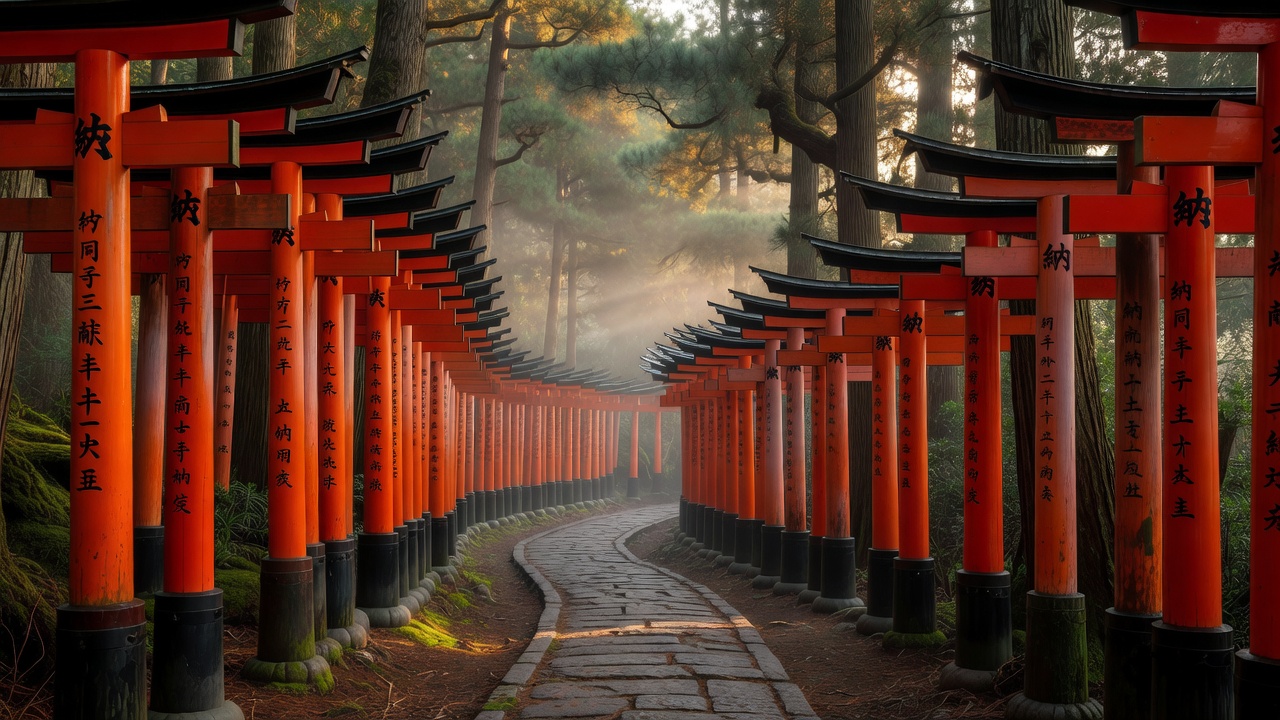
Fushimi Inari is older than the capital; the mountain is the shrine; people still come to pray for a harvest, a shop, a household. The foxes are messengers, not mascots. Halfway up Higashiyama, Kiyomizu-dera has been a place to put hands together for Kannon for more than 1,250 years. The slope below it is also a neighborhood buying bread. Arashiyama, west, was a playground of the old court. The basin holds humidity in summer and a dry cold that finds the wrists in winter.
What is there to sit with
One cluster. East-side temples or Arashiyama — not both unless the day is meant to become a commute. Mid-morning, sit. Tea. A garden bench. A hall that is still a hall. Nishiki still sells to kitchens in the morning: fish, pickle, a woman who has already done this hour for years. Buy something small. Leave before the street is only elbows.
Obanzai and a set lunch will teach more than a kaiseki booked as a personality. Onigiri on a bench beside a river that does not care about a list is allowed. A queue that exists to be photographed is not. Evening: dinner near the base already paid for. If neon is still wanted, Osaka is a short steel sentence south — tomorrow, not tonight.
Go when the foxes still have the path. That is not productivity. That is courtesy.
What you can learn from it
Kyoto City’s resident survey has said congestion and bad manners trouble about eight in ten people asked. Source: Kyoto City 市民意識調査, posted 2026-02-17. The vermilion approach did not get wider when the world arrived. A guest is on someone’s walk to the grocer. Timing beats ticket spam.
Gion is a neighborhood. People live and work there. Do not follow a geiko or a maiko. Do not walk a private alley because the light was good. A hard case on a city bus is how a resident misses their stop. Leave the big bag at the station or the room. The guest problem is not that you came. It is that you stayed in the midday picture and never noticed the family locking up.
Decide
Decide
What is there to sit with in Kyoto?
One cluster. A hall that is still a hall. Nishiki in the morning, when kitchens still buy. A garden bench. A machiya that is still a house. Five temple names in one day is how you become a commuter with a camera. Midday at Fushimi Inari and the Arashiyama bamboo are a parade. Go when the foxes still have the path, or choose a hall that is still a neighborhood tool.
What can a guest learn here?
Timing is courtesy. A suitcase on a city bus is how a resident misses the grocer. Gion is a neighborhood, not a set. Do not follow anyone in kimono. The guest problem is not that you came. It is that you stayed in the midday picture and never noticed the family locking up. Source: Kyoto City 市民意識調査, posted 2026-02-17.
How many days before Kyoto becomes a commute?
Two full days if you pick one cluster and one sitting afternoon in a room that is still a room. Three if a second neighborhood and a slow morning are allowed. Five temple names in one day is how you become a commuter with a camera.
Is Kyoto a stamp rally?
No. Timing beats ticket spam. Five temple names in one day is how you become a commuter with a camera. Midday at Fushimi Inari and the Arashiyama bamboo are a parade. Go when the foxes still have the path, or choose a hall that is still a neighborhood tool. Cherry week and autumn foliage turn the basin into an elbow economy — see the events page and decide whether you came for a tree or a city.
Where should you base?
Kawaramachi if dinner should be a walk home along the river, not another boarding. Kyoto Station if tomorrow is steel and you can resist treating the mall as the city. Gion-adjacent only if you can be a guest on a working street: voices down, no following, no private alley for the light.
What is the hard part residents already named?
Kyoto City’s resident survey has said congestion and bad manners trouble about eight in ten people asked. Buses fill with luggage the city is asking you to leave at the station. Gion is a neighborhood, not a theme park. People live and work there. Do not follow a geiko or a maiko. The guest problem is not that you came. It is that you stayed in the midday picture and never noticed the family locking up. Source: Kyoto City 市民意識調査, posted 2026-02-17.
How to stay a guest
Timing over stamp rally
The suitcase that steals a resident’s stop
Kyoto has asked this out loud. A hard case on a city bus is how someone who lives here misses the grocer. Leave the big bag at the station or the room. Walk the day with something you can lift onto a rack without a speech.
The slope is the transit
Higashiyama is walked. An IC card still works when you need a subway on the north–south spine. Buses are useful until they become a tourist weather system — then they are how you stand in someone else’s commute. Walk the cluster. Ride between clusters.
One cluster, then sit
Fushimi’s mountain or the Higashiyama slope, not a greatest-hits medley. Then a hall that is still a hall. Voices down on a working street. No following. No private alley for the light.
Sidewalks are not a nationwide pass
A city week is plastic and feet. Run the official table only if the Shinkansen is actually in the week: JR Pass 2026 · when to skip.
You will want to go. The hard part is remembering you are walking through someone’s morning. The free kit stays free. Japan depth is the longer read.