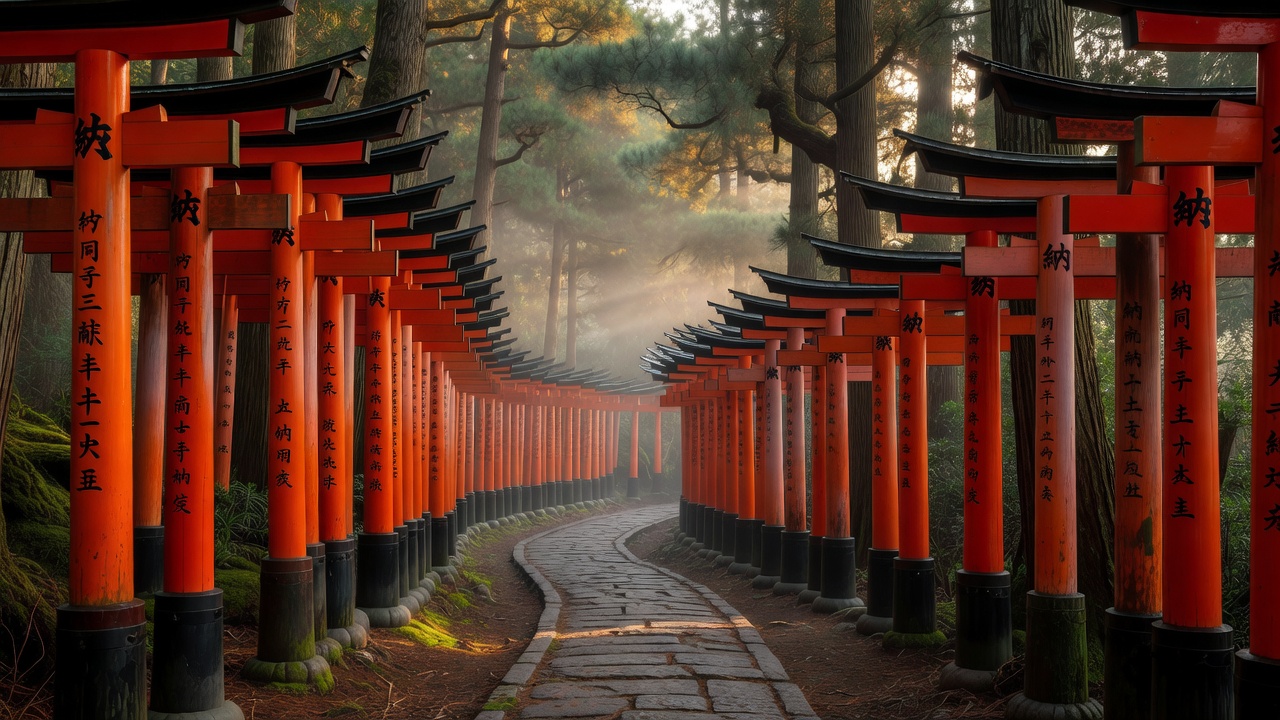
Japan · events
The year is a material people still live by.
Japan does not have one personality. It has a calendar. Cherry blossom is real weather and a real crowd. The more interesting season is the one already underfoot — wet June stone, cicada August, maple November, the dry blue of a winter courtyard. A commuter still has a Monday. Sit with the weather that is actually happening. Then stay a guest.
The living culture
Season is a shared room. Harmony here includes agreeing, briefly, that the air has a job: hydrangea weather, heat that cooks a platform, a maple week that is also a national appointment. The workweek does not pause for a perfect sky. Families still pack a bento for a viewing that is also a crowd, then go back to the train. Department-store windows change. A sweet exists for three weeks and then does not.
The civic calendar is older than the export photograph. Seasonal words trained a population to notice humidity as culture. Shrines mark a year as a neighborhood tool. Windows below are how the year usually behaves. Exact parade days move. Check the city’s official tourism page the month you book. We will not freeze a 2024 blog date into 2027, and we will not invent a bloom timestamp to look finished.
What is there to sit with
Late winter into early spring: plum before cherry. Good for Tokyo museums and Kyoto without the elbow economy. Sakura: south first, Hokkaido last. Tokyo and Kyoto often late March to early April — a band, not a booking code. Year-labeled forecasts only, from the Japan Meteorological Agency or an official hanami page. Picnic rules: take your trash, do not break branches for a photograph.
Golden Week: Japan travels inside itself. Immersion: Golden Week Japan. Summer: matsuri and hanabi are loud on purpose. A yukata crowd is a neighborhood, not a costume rental. Obon is family time. Autumn: momiji slides south-to-north; Kanazawa and quieter temples pay better. New Year: Hatsumode is dense. Many restaurants close. Convenience stores do not. The country is greeting its own year. You are a guest in that sentence.
If your entire Japan exists to stand under one tree at noon, you paid for a queue with petals.
What you can learn from it
Time is a material. Humidity, wind, a sweet that vanishes, a greeting that names the rain. Public space fills and empties on a civic clock. Food follows the same clock. A guest who only chased the famous week missed that ordinary weeks are seasonal too. Rain is not a refund of the country.
Let the season set the day’s tempo instead of punishing the sky. One weather is a chapter. That is honest. The next trip can be a different month, not a guilt add-on of prefectures. Overtourism in April is a resident who cannot buy bread on their own street.
Decide
Decide
What is there to sit with in Japan’s year?
Season is a shared room. Plum before cherry. Rainy moss. Heat that cooks a platform. Maple as a public appointment. A winter courtyard. Hatsumode that is someone else’s year. The year is spoken before it is photographed. Golden Week as social weather: Golden Week Japan.
What can a guest learn from the calendar?
Time is a material. Humidity, a sweet that vanishes, a greeting that names the rain. Golden Week, Obon, New Year: the country travels inside itself. A guest is in that appointment. Slack, not a raid. Use a year-labeled forecast from the Japan Meteorological Agency. We will not invent a bloom timestamp.
Should you book Japan around cherry blossoms?
Only if you can treat petals as weather, not as the whole trip. South usually opens first; Hokkaido last. Tokyo and Kyoto often sit in a late-March to early-April band — that is a pattern, not a reservation. Use a year-labeled forecast from the Japan Meteorological Agency or an official city hanami page the year you fly. We will not print a peak date.
When does Japan travel inside itself?
Golden Week (late April into early May), Obon in mid-August in many regions, and the New Year close. Trains and hotels jump. Either book months ahead or hide in a neighborhood and walk. This is not the week to wing Hiroshima or a same-day Kyoto raid.
Is autumn kinder than spring?
Often, for walking. Momiji slides south-to-north and mountain-to-city. Kyoto gets famous again. Kanazawa and quieter temples pay better. Confirm the garden or temple’s own notices the week you go. We will not invent a foliage peak.
What should you verify the month you book?
Parade days, museum closed days, last ferries, and any year-labeled blossom or foliage forecast on an official page. City tourism sites move. We will not freeze a 2024 blog date into 2027.
How to stay a guest
Weather first, festival second
Choose the weather you can walk in
Heat that finds the back of your shirt. A winter wind off a river. Rain that the garden already planned for. The trip is the walking. A parade is optional.
Open a year-labeled official page
Blossom and foliage forecasts belong to the year you fly. Start with the Japan Meteorological Agency and the city’s own hanami or momiji notice. If a blog gives you a Tuesday in 2027, it invented it.
Treat national holidays as Japan’s trip, not yours
Golden Week, Obon, New Year: the country is already on the train. Book the long steel early, or pick a neighborhood and refuse the raid. See first-timer hard parts.
Stops that pair with a season: Hiroshima · Kanazawa · top 10. Short-stay rules: Japan entry.