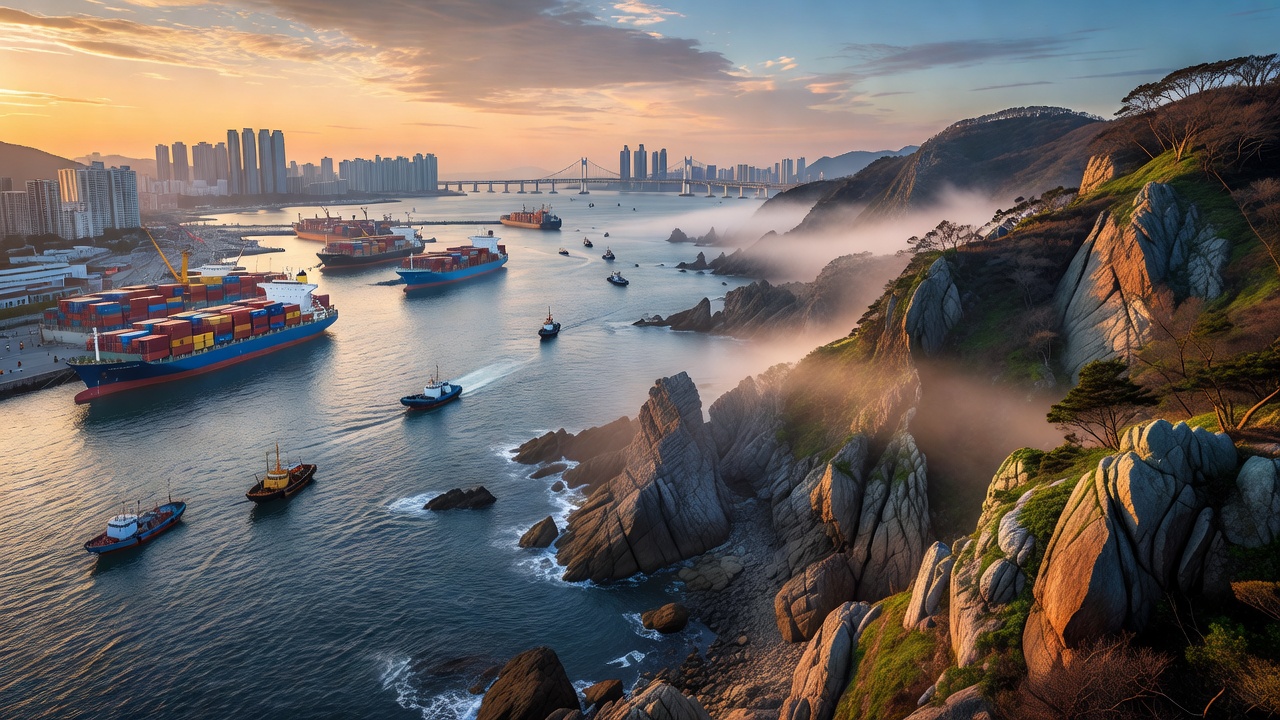
Korea · coast
The city exhales. You can too.
You step off the train and the air has a rumor of the sea in it. Someone is already speaking a warmer, punchier Korean than Seoul allowed you. Busan is salt after the capital: still a city, suddenly a shoreline. Eat something from a market you cannot name yet. Then stay a guest.
The living culture
When the war came south, this is where the map ran out of land. Families from everywhere on the peninsula ended up in these hills. That mix is still in the food and in the way a stranger will talk to you like you already agreed to be talked to. The port worked through occupation and through the years when the rest of the country was still deciding what a city was. Shipyards, ferries, a downtown that did not get pretty for you.
Haeundae is a neighborhood that happens to have a beach. It is not the city. The dialect will get you before the map does. That is a gift. Jeong here is punchier: a stall that remembers a regular, a stranger who has already started the sentence. Chuseok and Seollal empty hometowns in the other direction. Confirm the operator the week you go.
Gamcheon’s colors are fun. The hills are real. Go if you like stairs as a personality test.
What is there to sit with
Jagalchi is not a food hall. It is women who have been selling fish longer than an itinerary, and they can tell if you are performing curiosity. Point, pay, say thank you. If they laugh, you are doing fine. Gwangalli if you want the bridge lights. A smaller strip if you want to hear yourself. Beomeosa is a working temple in the trees, not a backdrop.
Residential hills where laundry and the sea share a clothesline. Gamcheon if stairs are a personality test. Official visitor notes: visitkorea.or.kr. We will not invent a metro fare, a temple hour, or a ferry timetable. Coming from Kyushu or leaving toward Fukuoka: the Japan–Korea corridor is sea or air. The operator has the hours.
What you can learn from it
Walk to water. Buy something fried. Let the capital drain from your shoulders. Do not schedule a cliff, a temple, and a night market on the afternoon you sat on a train. The humidity here has a job. Stairs are not optional in the pretty parts. Weekend Haeundae is a human weather system. If you only see the sand you will miss the hills.
Voices down at a working temple. Dress like you entered a room that is still in use. The person at the counter has a last order that is not you. Back inland: Seoul. Older Korea at walking speed: Gyeongju is usually kinder from here than from a Seoul raid.
Decide
Decide
What does the port actually feel like?
Salt air after the train. A warmer, punchier Korean than Seoul allowed. Families from everywhere on the peninsula ended up in these hills. That mix is still in the food and in the way a stranger will talk to you like you already agreed to be talked to. Haeundae is a neighborhood that happens to have a beach. It is not the city.
Is Jagalchi a food hall?
No. It is women who have been selling fish longer than your itinerary, and they can tell if you are performing curiosity. Point, pay, say thank you. If they laugh, you are doing fine. We will not invent a stall price or a last order. Official country orientation: visitkorea.or.kr.
What is the hard part?
Treating the sand as the city. Stairs are not optional in the pretty parts. The dialect will get you before the map does. That is a gift. Coming from Kyushu or leaving toward Fukuoka: the Japan–Korea corridor is sea or air. The operator has the hours.
How many nights does Busan actually want?
Two if the train or the ferry used the day: market and coast the first evening, one hill or one temple the next morning. Three if you want a residential hill and a quieter strip without stacking them as a punishment. A same-day raid from Seoul is a commute with a beach attached.
Where should you sleep?
Near a metro that hits both food and water. Downtown or the station belt if the train bookends a short stay and you want kitchens that still feed people after dark. Toward Gwangalli if you want the bridge lights and a walk that is still a city. Haeundae is a neighborhood that happens to have a beach. It is not the city. Sleeping only on the sand is how you miss the hills.
Gamcheon — go or wait?
Gamcheon’s colors are fun. The hills are real. Go if you like stairs as a personality test. Skip it if the afternoon already used your knees on a temple or a cliff. The city is bigger than the postcard. If you only see the paint you will miss the residential hills where laundry and the sea share a clothesline.
When do the crowds win?
Weekend Haeundae is a human weather system. Summer humidity here has a job. Do not schedule a cliff, a temple, and a night market on the same afternoon you sat on a train. Chuseok and Seollal empty hometowns in the other direction — Korea seasons. Confirm the operator the week you go. We will not invent a KTX seat or a ferry hour.
Guest practice at the port
Arrive and walk to the water
Walk to water. Buy something fried. Do not schedule a cliff, a temple, and a night market on the afternoon you sat on a train. The KTX is a mood change in a seat, not a race you owe the sand.
One hill or one temple — not both as a punishment
Beomeosa is a working temple in the trees, not a backdrop. Gamcheon if you like stairs as a personality test. If the hours do not fit, the coast is still the chapter.
Eat like the stall is still a stall
Jagalchi: point, pay, say thank you. A smaller strip if you want to hear yourself. Gwangalli if you want the bridge lights. The person at the counter has a last order that is not you.
Island only with spare days: Jeju. Entry: visa.go.kr. Kits stay free.