Korea · Craft & Design
A market that still cuts, a garment that still goes to dinner
Design in Korea is not only a gallery in Hannam. It is a grandmother’s banchan array, a ceramic that still has a regional accent, and a hanbok worn to a party without asking a guest’s permission. The plastic stool and the metal chopstick are part of the sentence.
The living culture
Jeong shows up as extra dishes and as a stall that remembers a regular. A country that eats quickly still plates with an eye. That is design. Hierarchy at a formal table is seating and two hands; at a market it is watching the cut before the steam. Family is the kimchi fridge humming in a different key, the hanbok taken out for a wedding or a first birthday, the grandmother who still wins the sidewalk in a visor. Contemporary streets argue with palace roofs. Both are Korea.
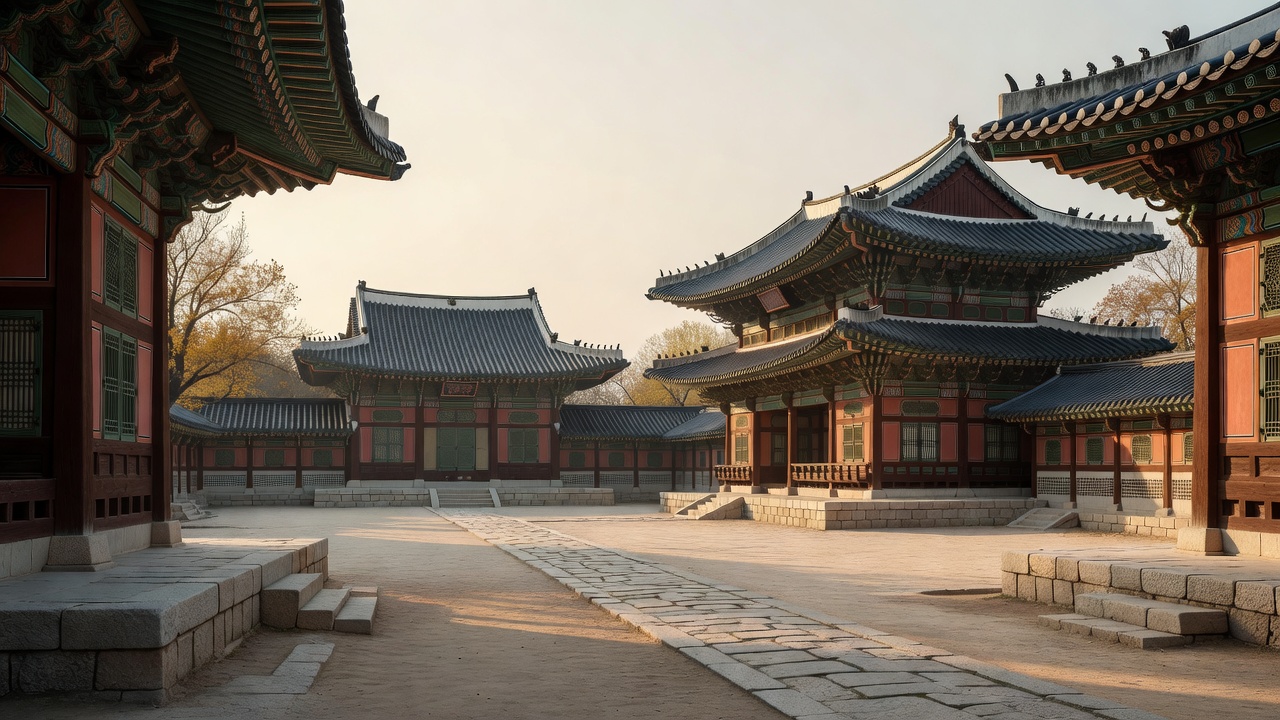
History that is still underfoot: kiln towns kept a clay’s accent the way a dialect keeps a coast. Joseon court rooms still teach a roof line a guest can see from a bus. Markets such as Gwangjang are not food courts with heritage lighting. They are workshops that fed a city through occupation, war, and the years when the skyline was still an argument. Walk the aisle knowing the knife predates the neon. That fact changes the photograph of the steam.
What is there to sit with
Gwangjang and its cousins: knives, steam, a negotiation with a memory. Watch the cut. The stool is part of the craft. Kitchen shops sell tools a household actually uses. Department-store basements and Insadong sit on a spectrum from serious to souvenir; the clerk’s patience is data. A speech about dynasties is not. Contemporary fashion in Seongsu and Hongdae is a street that argues with the palace. Walk both.
Hanbok is a living garment. Rental culture at palaces is a tourism weather layered on that fact. Ceramics want rice or they want a wall — hold the bowl. A jjimjilbang’s rented clothes and heated floor are civic design: a public room that is not a gallery. None of this is a circuit. One market, one garment hour, one bowl. The rest of the week can be a workweek city.
What you can learn from it
Craft literacy here begins at the table. Banchan is an array with a labor cost. Metal chopsticks and a quick meal are not a failure of grace. They are a tempo. Public space in a market is someone else’s stall; steam is labor. Time is the knife that has a memory and the clerk who will not perform a dynasty for a camera. Family is the garment worn to a ritual the guest was not invited to invent.
Transfer the lesson without the costume. One object that will be used. A food gift that can travel. K-beauty is a real industry and a real street — not more authentic than a bowl, not less. Buy what will be used. If the house that holds these objects is the next question — ondol, the heated floor a family lives on, and the second fridge that keeps kimchi — that is a different room, still on the same floor plan.
How to stay a guest
Ask before photographing a stall. A nod is not a contract for a reel in someone’s face. If hanbok is rented, treat the palace as a working historic site: paths clear, voices down, no picnic on the wood. It is clothing, not a mascot suit. Leave the palace keychain made for a tour.
We will not invent a rental fee or a stall price. Read the shop’s own board. Hold the bowl before the story. If it wants rice, the room is closer to craft. If it wants a caption, the weather is souvenir. The ajumma at the knife will still be cutting when the gallery in Hannam turns its lights down.
If the hanbok is only for a photograph at the gate, it is a filter. If it is worn to a dinner, the garment is closer to its job.
Decide
Decide
Is renting hanbok respectful?
It can be, if the palace is treated as a working historic site: paths clear, voices down, no picnic on the wood. Clothing, not a mascot suit.
Where is craft that is not a tourist street?
A kitchen shop, a market stall that sells tools, a contemporary gallery, a department-store basement. Insadong is a mix. Use the eyes.
Where does K-beauty sit?
A real industry and a real street. Not more authentic than a ceramic bowl and not less. Buy what will be used.
May a stall be photographed?
Ask. Steam is someone’s labor. A nod is not a contract for a reel in their face.
How to sit with this
Start in a market, not a concept store
Watch a knife. Then walk the design street if objects are still wanted.
Treat hanbok as clothing
If it is rented, wear it like a guest at a formal hour — not like a mascot.
Hold the bowl before the story
If it wants rice, the room is closer to craft. If it wants a caption, the weather is souvenir.
Carry less
The kimchi fridge at home will not need a palace magnet. The next subway still has room for one object.
This is a culture desk, not a booking desk. Official entry and rail numbers live on their source pages — we will not invent a fare here. Prefer the atlas if you want the next country, or Understand if you want the next category.