Japan · city
Tokyo is villages that share a subway map.
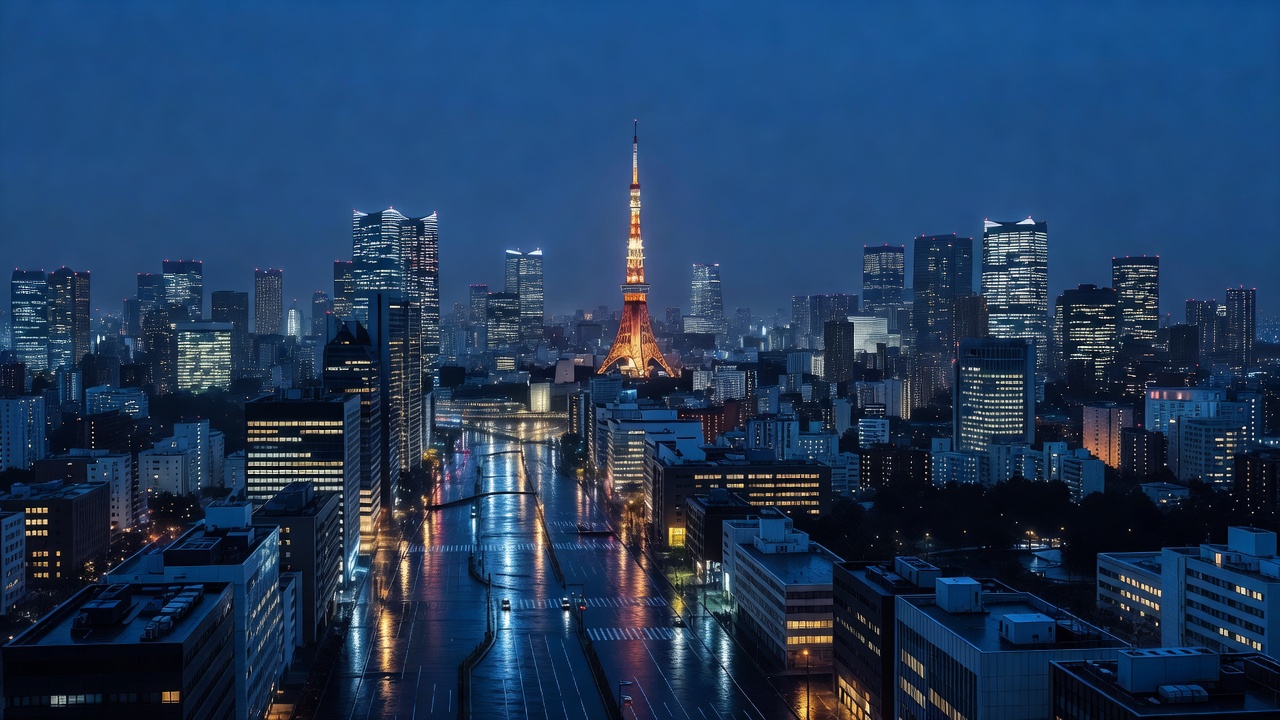
A station attendant has already said the same sentence two hundred times today. The air tastes like rain on metal and convenience-store coffee. Commuters in dark coats have walked farther than an afternoon plan. Tokyo is not one city. It is a stack of villages that happen to share a subway map. Sit in one until it has a face. Then stay a guest.
The living culture
First-timers try to “do Tokyo.” The city does not offer that verb. Yanaka still has faces that remember the block. Shinjuku has faces that remember the last train. Both are Tokyo. Neither is a costume. A shop street under a tin roof still sells screws, fish, and a melon bread that is someone’s three o’clock. The person behind the noren is not an extra.
Do not start with shoguns. Start with the rebuild. Postwar Tokyo poured concrete in a hurry, then dressed the hurry in neon, then in glass. Both Olympics are still in the sidewalk: 1964’s expressways, 2020’s leftover wayfinding, a path slightly too narrow for the crowd it now carries. “Old Tokyo” is often a shopfront decision — timber face, steel bones. Alley width still remembers Edo. A shrine is a neighborhood tool, not a destination.
What is there to sit with
Sunday at Shinjuku or Ueno is the honest museum. A father with a backpack that is too organized. A grandmother making her body into a gate so a stroller can pass. Couples who have not decided the apartment question. A single person with a finishable convenience-store meal, which is not the same as lonely — not yet. Watch who holds whose bag. That is more of the capital than any tower.
One neighborhood until the street has a face. Shimokitazawa records, Yanaka clay, or Kiyosumi-Shirakawa coffee — pick one. Afternoon: a museum or a park, not both plus a tower. Sit in a room that is quiet on purpose. Evening: a counter that seats eight. The cook will nod once and keep going. Ride the Yamanote home like a person who lives here for a week. The commuters will still be going to work.
If your feet hurt in a good neighborhood, you are doing it right. If they hurt in a transfer corridor, you planned like a spreadsheet.
What you can learn from it
Public space here is a shared room. Voices down in the car. Trash stays in the bag until a bin appears, which is a scavenger hunt and also manners. People will help with a map and then vanish into privacy. The fare is attention. History here is the height of a second floor, the way the Yamanote still insists on being a spine, the way a bathhouse outlasts the fashion about bathhouses.
Transfers teach more than a tower. A connection that looks tidy on a map can be ten minutes of humidity and a river of commuters who already know which stair. Summer is a wet backpack. Winter is a dry wind that finds the gap in a coat on a platform. The cars are cold enough to need a layer. The streets hold the day’s heat. A guest learns both in the same hour.
Decide
Decide
What is there to sit with in Tokyo?
One village until the street has a face. A shotengai under a tin roof. Sunday at Shinjuku or Ueno: who holds whose bag. Yanaka clay and a sento that kept its tiles — Miyano-Yu. A counter that seats eight. The capital is not a trophy. It is rooms stacked on one subway map.
What can a guest learn here?
Privacy as a public good. Voices down in the car. Transfers that look tidy on a map and feel like weather. People will help with a map and then vanish into manners. The fare is attention, not a tower. First-timer friction that is not a fare: Japan first days.
How many days does Tokyo actually want?
Three full days if this is the only Japanese city: time enough to learn one village and sit in one quiet room. Four or five if a second neighborhood and one museum get a morning each. A single overnight treats the capital like a layover with neon.
Where should a first-timer sleep?
Shinjuku if you can sleep through a city that does not: last-train faces, a convenience store that never blinks, the night already on when you exit. The Ueno and Yanaka edge if you want temple lanes and a shop street that still remembers the block. Walk to Miyano-Yu like a person with time. The Tokyo Station belt if tomorrow is a Shinkansen, not a scavenger hunt with bags.
Does a Tokyo-only week need a nationwide JR Pass?
No. A Tokyo-only week is an IC card and your feet: villages, a Yamanote loop, a counter that seats eight. The nationwide pass is a long-steel product. Official prices live on japanrailpass.net. We transcribe them on the JR Pass 2026 page and do not invent a comparison fare. See also when to skip.
JR or IC for getting around Tokyo?
IC first. Suica, PASMO, or the visitor versions the machines sell. Tap in, tap out. JR lines inside Tokyo still take the same plastic. A nationwide pass is a different product — it does not make the metro free. We will not invent a stored-value number. Buy the card before you collect opinions. Reload when the reader asks.
When do the crowds win?
Golden Week and the peak cherry window turn every transfer corridor into a weather system. Sunday at Shinjuku or Ueno is already a family museum. Midday Shibuya is a weather you choose. If the week is Kansai temples and food, start in Osaka or Kyoto and let Tokyo be a later chapter. See the events calendar and book the long steel before you romanticize winging it.
How to stay a guest
A village, a card, a day that ends
The click that makes the city usable
Buy an IC card before you collect opinions. Tap in, tap out. JR inside Tokyo still takes that plastic. A nationwide pass is a different product. Official yen, if the map grows a second city: japanrailpass.net · JR Pass tables. We will not invent a stored-value number.
The Yamanote as other people’s commute
One loop teaches the villages: who gets off with a school bag, who stays for the office belt, who is already asleep standing. After that, learn one metro line by accident.
Sit until the street has a face
Shinjuku if the film is already running. Ueno and Yanaka if the block still has a name. Walk to Miyano-Yu like a person with time. The egg sandwich is allowed. It is how the city feeds people who are still commuting.
The free Japan kit stays free. The depth pack is the longer offline read.