Japan · houses
The other shoe is still missing.
Morning. A child sits on the step that is not quite the house and hunts for the school pair. The rice cooker has already done its work. A bento lid waits on the counter. One pair of shoes points at the door and is empty. That person is already on the train. Sit with the threshold. Then stay a guest.
The living culture
The door is not the border. The genkan is. A lower floor, often tile, where street dirt is allowed to stop. In the vast majority of Japanese homes you take the shoes off here and step up. The custom sits on an older fact: people sat and slept on tatami, so the road stayed out. The house will tell you faster than a guide. The wood is clean because the street did not come in.
A listing does not say house the way a Western ad does. It says 2LDK. Two rooms, plus one room asked to be living room, dining room, and kitchen at once. Japan’s real-estate advertising code will not let a seller call a space LDK unless it can actually do those three jobs. The number is bedrooms. It is not a promise of air. A couple, a child, a desk that is also a drying rack — the rooms are counted, then lived in sideways.
The guest who walks in wearing them has not entered a room. They have brought the road onto the floor.
What is there to sit with
After the war there were not enough houses. In 1951 the state wrote a public-housing law. In 1955 it stood up the Japan Housing Corporation — now the Urban Renaissance Agency — to put fireproof blocks where the shortage was worst. The first complexes were 2DK. People still call the grain danchi. Stairs without drama, a balcony for laundry, a courtyard the same as the next courtyard. Grandmothers age in them. The young ones come back some Sundays with a bag of fruit and leave before the last train.
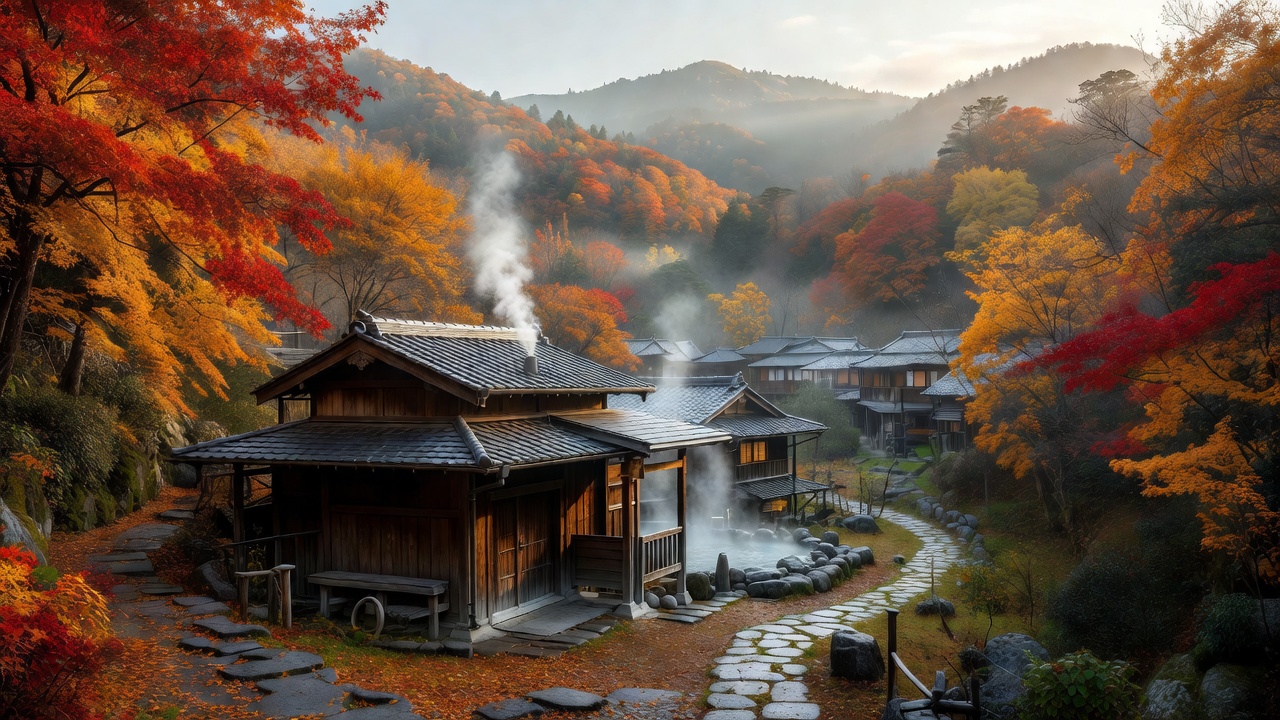
Kyoto still has machiya. The city means a wooden townhouse built before the 1950 Building Standards Act, traditional in structure, born of urban life. A long earthen passage — the tōriniwa — runs from the street toward the back. Raised wooden floors. Tatami. A courtyard the size of a held breath. Work used to happen at the front. Sleep still happens at the back. The lattice photographs well. Behind it: winter, the carpenter, a house that asks to be maintained.
What you can learn from it
Walls are thin. Not always. Often enough that you learn the neighbor’s television by season. Privacy is a volume knob, not a material. You hear the child next door at the piano and you do not mention it. Upstairs — or in the room that still has her low table, even if she is a train away now — is the leftover of three generations under one roof.
The hard part is already in the room. Small rooms. Thin walls. Stock getting older faster than the photograph. The guest who walks in shoes. The townhouse that looks like a gift until January arrives and the carpenter does. Japan will let you in. Leave the street at the step.
Decide
Decide
What is there to sit with of a Japanese house?
The genkan: street dirt stops on the tile — the genkan essay. A listing that says 2LDK, not house. Danchi stairs and Sunday fruit. A Kyoto machiya with a tōriniwa and a carpenter in January. You will see the outside of the inside more often than the rooms.
What can a guest learn from how a house is named?
Leave the street at the step. Privacy is a volume knob, not a material. Thin walls teach the neighbor’s television by season. Instant intimacy is the problem. If you are invited through, you were invited through a line, not into a documentary. Being a guest.
Will a guest actually see the apartments?
Usually, no. Shoes lined in a genkan you are not invited through. A balcony with laundry and one plant. Sunday at the station is as close as most guests get. Do not collect it as atmosphere.
How to stay a guest
Leave the street at the step
Watch the floor before you speak
A step, a rack, slippers waiting. Follow the host’s feet. The genkan essay is the shorter lesson.
Do not invent the rest of the house
You were invited through a line, not into a documentary. A small omiyage is kinder than a speech. Confirm dress with a host.
Let a wooden house be a house
Do not walk a private alley because the light was good. Kyoto still writes ordinances because these houses keep coming down. Kyoto.
Same rooms on the trip: the genkan essay · Kyoto · how work looks · how people date.