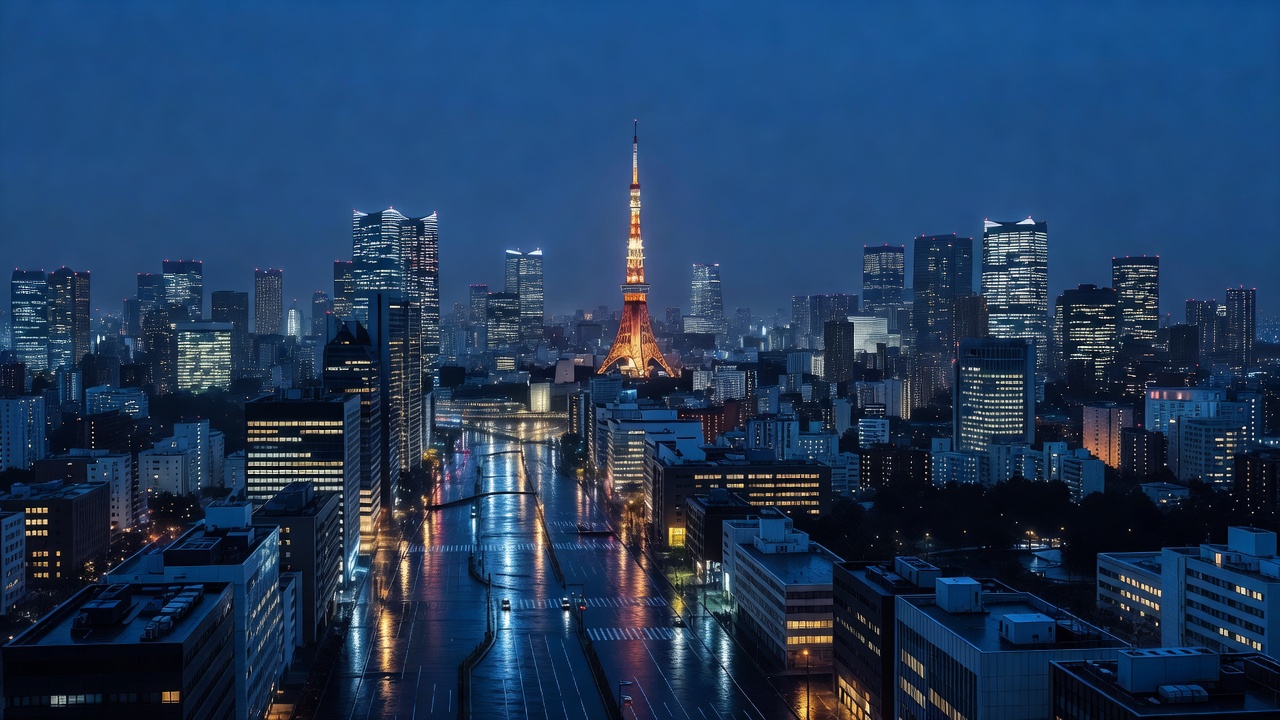
Japan · work
The office is a weather system.
You will see the suits on the Yamanote in the morning and again when the day has already gone home. That is the postcard. Under it, a kitchen that will never be on a map. Sit with the commute. Then stay a guest in someone else’s Monday.
The living culture
The bento is already packed. Rice still warm. A pickled plum holding the corner. Someone left before the kettle finished. A school bag waits on the chair. The person who closed the lid is already in a JR East loop that treats the city as weather: pressure, a delay announced like rain, a courtesy that is not optional. The train does not care what you came here to become. It carries people who already have a Monday.
Lifetime company — shūshin koyō — was a postwar pattern, not a law. It settled with the high-growth decades: one firm, a household that planned around the name on the badge. It was never the whole country. Small shops, farms, women who left and could not come back as the same person — they were already outside the myth. The pattern has loosened. The care about not making other people late did not loosen with it.
What is there to sit with
Being late is treated as making someone else wait in public. Trains, meetings, dinner reservations — the clock is social. You feel it in the way a platform fills before the doors, and in the way a host looks at the empty chair before they look at you. Tokyo Metro asks for silent phones. The rest of the country does not need a sign.
After-work drinks exist, and they are less mandatory than the old stereotype. Some teams still nomikai. Many younger offices skip it. The ones who go are finishing a day that already had a kitchen in it. Convenience stores are infrastructure. Workers eat there because the shift did not include a table. The egg sandwich is how a working country stays fed.
The most useful work skill you can copy as a guest: lower your voice on the commute. That is respect, not submission.
What you can learn from it
Overtime is regulated. That is a labor fact, not a travel tip. On the street it still arrives as weather: the late suit, the convenience-store dinner eaten standing, the apartment that is dark when the person who packed the bento finally sits down. Loneliness in a working city is a specific climate. You can be useful in a meeting and still eat alone.
Language still gates most offices. English-first roles cluster in certain Tokyo firms and remote setups. Sponsorship and status of residence are government matters — Immigration Services Agency, Ministry of Foreign Affairs. We will not fake a digital-nomad shortcut. Business cards still appear in older or formal rooms. Two hands, a glance at the card. The card is a person standing on the table.
Decide
Decide
What is there to sit with of Japanese work?
Suits on the Yamanote in the morning and again when the day has already gone home. A bento packed before the kettle finished. A convenience-store dinner eaten standing — convenience-store dinner. Time as a public act. That is the postcard and the kitchen under it.
What can a guest learn from it?
Being late is treated as making someone else wait in public. Voices down on the commute. Convenience stores are infrastructure. After-work drinks are less mandatory than the old stereotype. Do not crash one as a tourist. Lower your voice. That is respect, not submission.
Is this a visa or salary guide?
No. This is traveler-visible culture. If you plan to work here, use official immigration and labor sources. Language still gates most offices. We will not fake a digital-nomad shortcut. Entry, official only.
How to stay a guest
Lower your voice. Leave when the room is done.
Treat the commute as a public room
Voices down. Phone to the chest. The train carries people who already have a Monday. Tokyo.
Eat like the shift
Convenience stores are infrastructure. The egg sandwich is allowed. Convenience-store dinner.
Do not crash a nomikai
If you are invited twice, you may go, stay for the first pour, and leave before you become the story. Confirm dress with the host. A small omiyage is kinder than a speech about disruption.
Back to the trip: convenience-store dinner · Tokyo · how houses feel · how people date.