Japan · essay
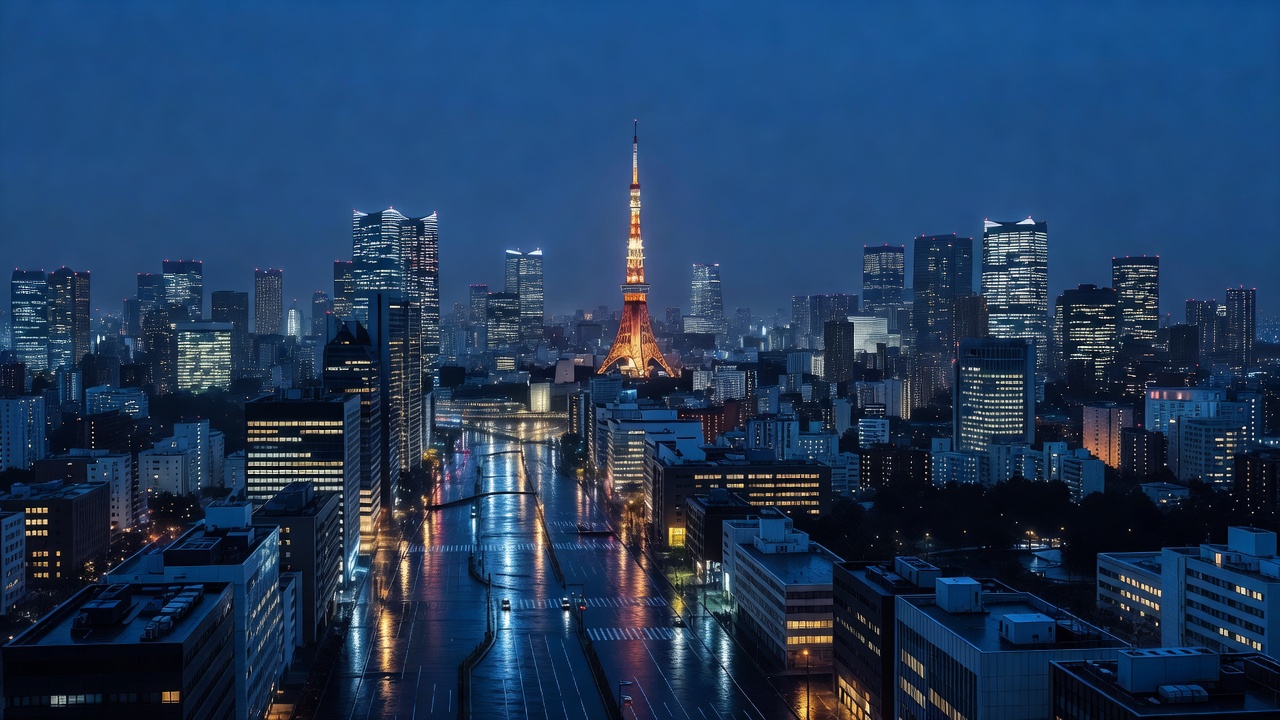
Workers buy dinner in a Tokyo convenience store after the shift.
You will see the suits on the Yamanote in the morning and again when the day has already gone home. Under that postcard is a kitchen that will never be on a map — and, later, a plastic tray on a station bench. Convenience stores are how a working country stays fed. You are welcome at that counter. Pay, heat, and step aside.
The living culture
The bento is already packed. Rice still warm. A pickled plum holding the corner. Someone left before the kettle finished. A school bag waits on the chair. The person who closed the lid is already in a JR East loop that treats the city as weather: pressure, a delay announced like rain, a courtesy that is not optional.
Overtime is regulated. That is a labor fact, not a travel tip. On the street it still arrives as weather: the late suit, the convenience-store dinner eaten standing, the apartment that is dark when the person who packed the bento finally sits down. Loneliness in a working city is a specific climate. You can be useful in a meeting and still eat alone.
The most useful work skill you can copy as a guest: lower your voice on the commute. That is respect, not submission.
What is there to sit with
Sunday at a big station, a person in yesterday’s work clothes eats from a plastic tray that is finishable. That is not always loneliness. Sometimes it is the night after looking after someone. Two people share a convenience-store meal on a bench and have not decided whose name goes on the lease. The platform is the honest museum.
New Year: many restaurants close; convenience stores do not. Golden Week: the country is already on the train; the store is still open at the hour the raid fails. We will not invent a closing time. We will tell you the store is infrastructure — the same way an IC card is infrastructure, and a genkan is a border. Golden Week · genkan.
What you can learn from it
The egg sandwich is allowed in Tokyo and in Hakata, late, when the last train is still a fact. Workers eat here because the day did not include a table. A guest may too. Pay, heat, move. Do not camp on the microwave line with a reel. Do not photograph the person in the suit.
Trash stays with you until a bin appears. Voices down. Sit where sitting is already the room: a station bench, a stool the store put there on purpose. Not a temple approach. Not someone else’s stoop. We will not print a yen figure or a ranking. The one in front of you is the one.
Decide
Decide
What is there to sit with in a convenience store?
Rice still warm. An egg sandwich that feeds a commute. A person in yesterday’s work clothes finishing a plastic tray. Two people sharing a meal who have not decided the lease. That is how a working country stays fed. The platform is the honest museum — Sunday station.
What can a guest learn from it?
Convenience stores are infrastructure. Workers eat there because the shift did not include a table. You can too. Pay, heat, step aside. Do not film the person heating karaage. We will not invent a yen figure. The office as weather: how work feels.
Is a convenience-store dinner a failure of “real Japan”?
No. Convenience stores are infrastructure. Workers eat there because the shift did not include a table. The egg sandwich is how a working country stays fed. You can too. The office as weather: how work feels.
What about New Year, when restaurants close?
Many restaurants close. Convenience stores do not. Plan food like an adult. That is a calendar fact, not a shop-hours table we will invent. Hatsumode is beautiful and dense. See events & seasons. The country is greeting its own year. You are a guest in that sentence.
Do we list prices or the best egg sandwich?
No. We will not invent a yen figure or a ranked list so the page looks finished. The bowl or the sandwich in front of you is the one. Chains differ by neighborhood and hour. Eat. Then go be a person on the street.
How to stay a guest
Eat, step aside, do not film the shift
Treat it as a kitchen, not a joke
Workers eat here because the day did not include a table. You may too. The egg sandwich is allowed in Tokyo and in Hakata, late, when the last train is still a fact.
Pay, heat, move
Do not camp on the microwave line with a reel. Do not photograph the person in the suit. Trash stays with you until a bin appears. Voices down.
Sit where sitting is already the room
A station bench. A stool the store put there on purpose. Not a temple approach. Not someone else’s stoop. Then go back to being a person in a village.
Do not invent a ranking
We will not print a yen figure or a “best egg sandwich in Shinjuku.” The one in front of you is the one. Longer read on work: How work feels.
The free Japan kit stays free. The depth pack is the longer offline read.