Korea · history
The map has a hard northern edge.
That is not atmosphere for a week. It is why this country learned to move quickly, to stack families in towers, to treat a Saturday like it might be useful. You will feel it in the subway and in the stranger who still walks you to the right exit. Read the rooms. Then stay a guest.
The living culture
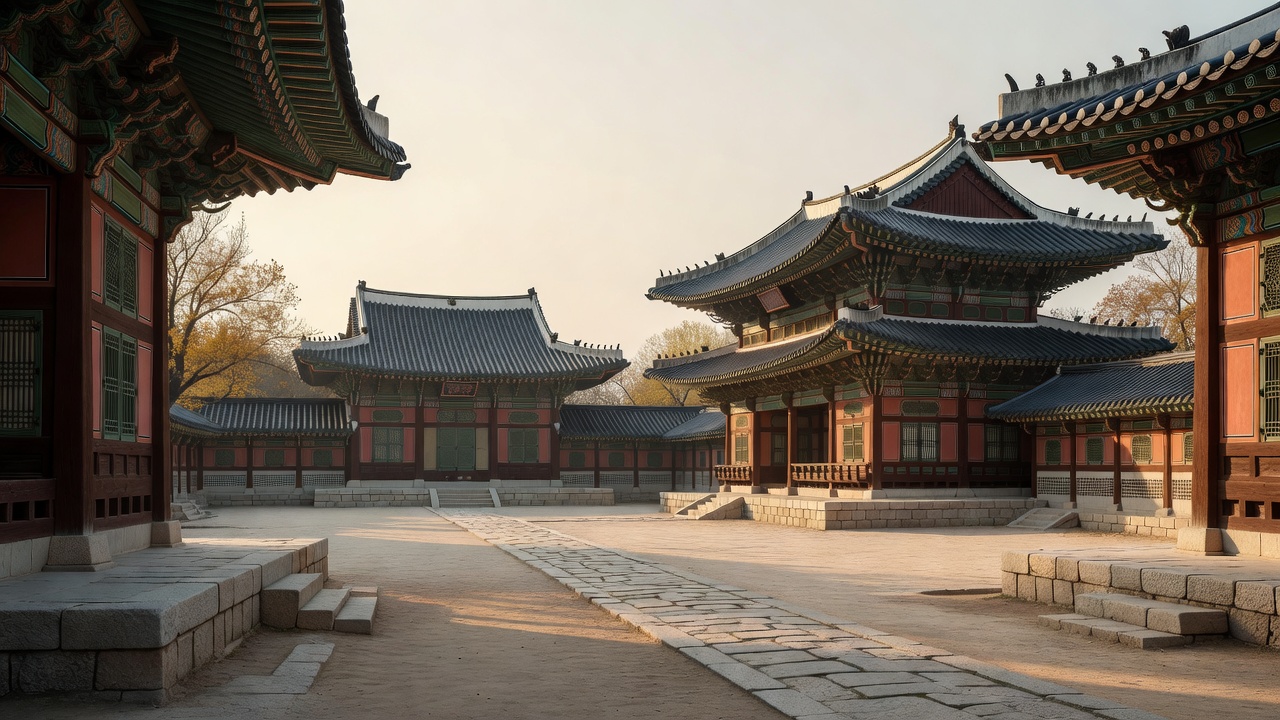
Seoul kept its old rooms inside a working capital. A palace roof sits in the middle of a bus route. A courtyard that used to decide a kingdom now hears delivery scooters. Joseon is not a suburb. It is a subway stop. Occupation left granite and ghosts. The war is in living memory — reunion footage on television is not a metaphor.
Families still talk about a hometown on the other side of a line as if the line were weather. Civil-defense drills are not folklore. The North is close enough that you do not get to treat it as a set. You do not need to perform that. You do need to not film it for a caption. The skyline is a so-called miracle. The miracle is also the grandmother who has outlived three versions of the same neighborhood.
History here is underfoot. A wiki dump in the courtyard is how you miss the bus that is still someone’s commute.
What is there to sit with
Two palace mornings in a week is a reading, not a circuit. Hear the bus. Leave the hanbok parade to people who came for it. Gyeongju is where the older kingdom still looks like hills until you learn the names — tombs in a basin, a slower clock. Busan held the country when the capital could not: a port, a wartime government, a shoreline that is still working.
Jeju has its own weather and its own memory; do not punish an island into a day trip. Temples are devotion. Museums will tell you more than a reel. If you are coming from Hakata or leaving toward it, that is a different chapter — Busan, then the corridor. Courtesy on both sides of the water: being a guest.
What you can learn from it
Walk a courtyard knowing a city bus is audible from a room that once decided a kingdom. That fact changes the photograph. A mound in Gyeongju is a grave until you learn the name. A fence at the northern edge is a border. Occupation and liberation are still underfoot — a street name, a museum room, a ferry that is a real crossing.
Do not collect that as atmosphere. The Japan depth pack lives on Japan depth. The crossing is sea or air, operator-live. We will not invent a sailing. You are a guest in both sentences.
Decide
Decide
What does a palace actually feel like?
Joseon halls are still in the bus route. You can hear a city bus from a courtyard that used to decide a kingdom. Two palace mornings in a week is plenty. The rest of the day is the body of the city — Seoul. Leave before you become a hanbok parade.
Is Gyeongju a checkbox from Seoul?
No. Tombs that look like hills until you learn the names. A slower clock. Best as an overnight from Busan or a dedicated day — Gyeongju. Do not punish an older kingdom into a round-trip that eats the week.
Should I go to the DMZ?
Only if you want the history, not a thrill ride. It is a real border with real soldiers. Book through official channels. Behave like it is a border, because it is. Do not film drills, fences, or the news for a caption. Check the operator and the official notices the week you go.
How do I walk the Japan chapter without collecting it?
Occupation, liberation, and the corridor are still underfoot. You will feel them in a street name, a museum room, a ferry that is a real border. Do not collect that as atmosphere. The Japan depth pack lives on Japan depth. The crossing is sea or air — Japan × Korea.
Guest practice in the old rooms
One palace morning, then the body of the city
Two in a week is plenty. Hear the bus. Leave the hanbok parade to people who came for it. Seoul first days.
DMZ only as history
Official tours. Official notices the week you go. No thrill-ride voice. No invented hour. The fence is not a backdrop.
Gyeongju as an overnight if the week breathes
Tombs, a basin, a slower clock. From Busan, not as a punishment lap from the capital. Gyeongju.
Do not collect occupation as a caption
Japan’s longer offline read lives on the other hub — Japan depth. The crossing is operator-live. You are a guest in both sentences.